

In This Article
Toggle⚡ Quick Answer
- Per application: 6–8 weeks before a maintenance appointment is needed
- Total hair lifespan: Up to 9–12 months with proper care (reused 3–4 times)
- Key factors: Extension quality, hair type, aftercare routine & stylist skill
- Australian climate tip: Humidity & UV can affect adhesive — use extension-safe products year-round
You’ve fallen in love with a longer, fuller look — and tape in extensions are calling your name. But before you book your appointment, one question keeps coming back: how long do tape in extensions last, really?
We hear this every day at Art Hair Extension Australia, and the honest answer is: it depends. But with the right information, products, and aftercare, you can absolutely maximise your investment and keep your extensions looking gorgeous for as long as possible.
In this guide, we cover everything Australian women need to know — from the initial 6–8 week application window to total hair lifespan, the factors that make or break durability, and the exact care routine that keeps your tape in extensions flawless between appointments.
What Does “How Long Tape In Extensions Last” Actually Mean?
This question has two distinct answers — and confusing them is one of the most common mistakes people make when researching tape extensions:
- How long the bonds last per application: How many weeks the adhesive tabs stay secure in your natural hair before they need to be moved up or reapplied.
- How long the hair weft itself lasts: The total lifespan of the actual hair — how many reapplication cycles you get before the hair looks worn and needs replacing.
Understanding both is crucial for budgeting and planning your extension journey.
How Long Do Tape In Extensions Last Per Application?
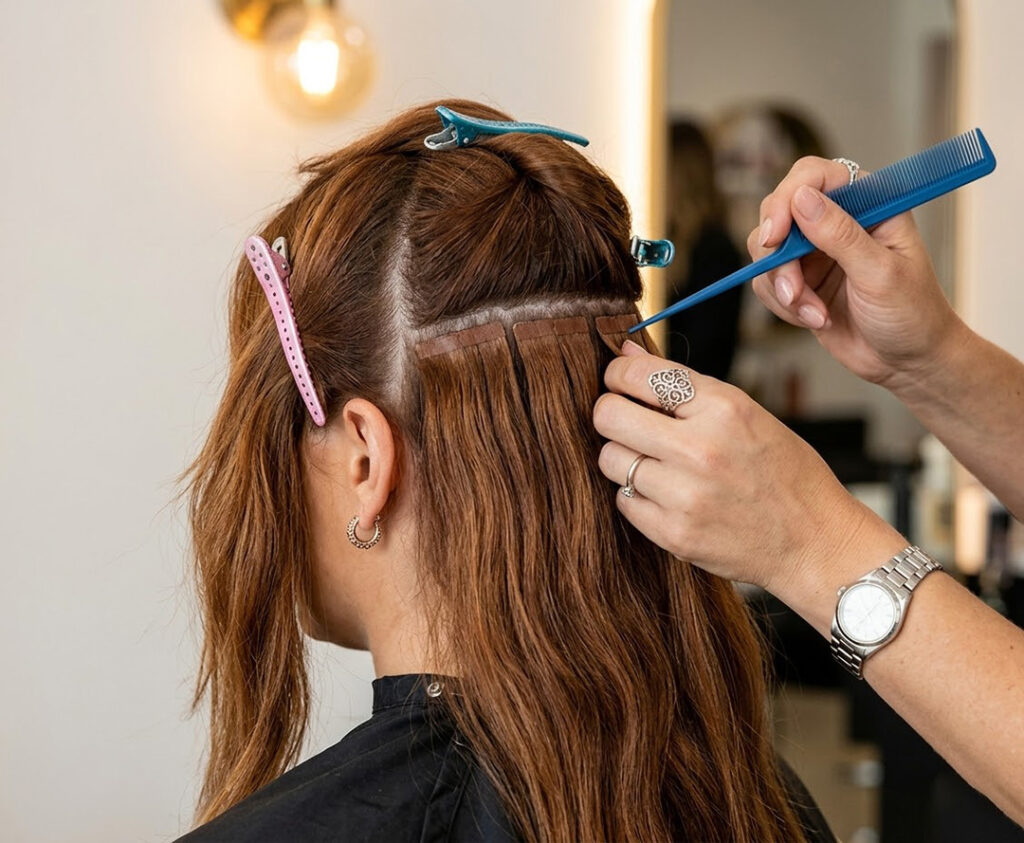
On average, tape in extensions need to be removed and reapplied every 6 to 8 weeks. This is the industry standard in Australia and aligns with recommendations from leading extension brands and certified stylists nationwide.
Some clients with slow hair growth and an excellent care routine can stretch this to 8–10 weeks. On the other hand, clients with oily scalps, fine hair, or highly active lifestyles may need to return closer to the 6-week mark.
🔬 Why 6–8 Weeks? Here’s the Science
Your natural hair grows approximately 1.25 cm per month. As it grows, the tape tabs — attached close to your scalp — migrate further from the root. After 6–8 weeks, the tabs have moved noticeably from the scalp. At this point they can become visible, feel uncomfortable, and place strain on your natural hair if left unattended. This is also when slippage, tangling, and matting are most likely to occur.
Signs It’s Time for Your Maintenance Appointment
- The tape bonds are visible or sitting away from the scalp
- You notice slippage or tabs sliding down the hair shaft
- Extensions feel heavier or lopsided on one side
- Increased tangling or matting near the roots
- A noticeable gap between your natural roots and the extension tab
How Long Do Tape In Hair Extensions Last in Total?
Here’s the great news: unlike some extension methods, tape in extensions are designed to be reused. When a professional removes them, cleans off the old adhesive, and applies fresh tape, the hair itself continues looking great.
With quality Remy human hair extensions — like those we use at Art Hair Extension Australia — and consistent maintenance, you can expect:
Budget / Synthetic
2–4 months
1–2 reapplications. Hair quality deteriorates quickly.
Mid-Range Human Hair
4–6 months
2–3 reapplications with good care.
Premium Remy Hair
6–9 months
3–4 reapplications with standard care routine.
Premium Remy + Excellent Care
9–12+ months
4–5 reapplications. Maximum value for your investment.
The key takeaway: the application lasts 6–8 weeks, but the investment in quality hair can last up to a full year or more when properly maintained.
8 Factors That Determine How Long Your Tape In Extensions Last
Not all tape extensions age the same way. Several individual factors influence how long they’ll stay looking their best. Understanding these will help you set realistic expectations and protect your investment.
| Factor | Impact on Lifespan | What To Do |
|---|---|---|
| Hair type (fine/oily) | High – oily hair breaks down adhesive faster | Use dry shampoo, wash 2–3× per week |
| Hair growth rate | High – faster growth means more frequent reapplication | Book 6–8 week maintenance appointments |
| Product choices | High – oil-based products loosen bonds quickly | Use sulfate-free, extension-safe products only |
| Heat styling | Medium – frequent heat weakens the weft over time | Always use heat protectant; keep tools below 180°C |
| Swimming (pool/ocean) | Medium – chlorine & salt weaken adhesive | Wear hair up; rinse immediately after |
| Sleeping habits | Medium – friction causes matting and tangling | Braid loosely; use silk pillowcase |
| Extension quality | High – Remy human hair outlasts synthetic significantly | Always choose 100% Remy human hair |
| Stylist skill | High – poor application shortens lifespan dramatically | Choose a certified, experienced extensionist |
1. Your Natural Hair Type
Fine hair provides less surface area for adhesive to bond to, which can cause tabs to slip sooner. Very oily scalps are the biggest challenge — natural oils travel down the hair shaft and break down the adhesive over time. If you have oily hair, washing every 2–3 days and using dry shampoo can significantly extend wear time.
2. Your Hair Growth Rate
The average Australian grows about 1.25 cm of hair per month, but this varies widely. Fast growers may need to return closer to the 5–6 week mark, while slower-growing clients can safely wait the full 8 weeks. Your stylist will assess your growth rate at consultation.
3. Products You Use
This is one of the most controllable factors. Oil-based serums, deep conditioning treatments applied at the roots, and sulfate-heavy shampoos all degrade tape adhesive. Always use sulfate-free, extension-safe products — and keep conditioner away from the roots and bonds.
4. How Often You Wash Your Hair
Over-washing strips the adhesive prematurely. We recommend washing 2–3 times per week using lukewarm water. Always let extensions dry fully before sleeping or tying your hair up.
5. Heat Styling
Frequent use of flat irons, curling wands, and blow dryers — especially near the bonds — weakens the weft over time. Always use a quality heat protectant, keep tools below 180°C, and never apply direct heat to the tape bonds themselves.
6. Swimming and Sweat
Australia’s coastal lifestyle is incredible, but it’s not always kind to tape extensions. Saltwater and pool chlorine both weaken adhesive and dry the hair. Tie your hair up before entering the water, rinse thoroughly afterward, and pat — never rub — dry. Sweating heavily during exercise has a similar effect, so washing post-gym is important.
7. Sleep Habits
Friction is the enemy. Sleeping with hair loose on a cotton pillowcase creates significant friction that tangles extensions and stresses bonds. The simple fix: loosely braid your hair before bed and switch to a silk or satin pillowcase. Many of our clients say this single change extended their wear time by weeks.
8. Extension Quality and Installation
The quality of the hair and the skill of the application are arguably the two biggest factors. Budget extensions made from synthetic or non-Remy hair tangle easily, lose lustre quickly, and rarely survive more than one or two reapplications. A poorly trained stylist can apply extensions unevenly, damaging your natural hair and shortening the lifespan of the extensions themselves.
8 Factors That Determine How Long Your Tape In Extensions Last
Not all tape extensions age the same way. Several individual factors influence how long they’ll stay looking their best. Understanding these will help you set realistic expectations and protect your investment.
| Factor | Impact on Lifespan | What To Do |
|---|---|---|
| Hair type (fine/oily) | High – oily hair breaks down adhesive faster | Use dry shampoo, wash 2–3× per week |
| Hair growth rate | High – faster growth means more frequent reapplication | Book 6–8 week maintenance appointments |
| Product choices | High – oil-based products loosen bonds quickly | Use sulfate-free, extension-safe products only |
| Heat styling | Medium – frequent heat weakens the weft over time | Always use heat protectant; keep tools below 180°C |
| Swimming (pool/ocean) | Medium – chlorine & salt weaken adhesive | Wear hair up; rinse immediately after |
| Sleeping habits | Medium – friction causes matting and tangling | Braid loosely; use silk pillowcase |
| Extension quality | High – Remy human hair outlasts synthetic significantly | Always choose 100% Remy human hair |
| Stylist skill | High – poor application shortens lifespan dramatically | Choose a certified, experienced extensionist |
1. Your Natural Hair Type
Fine hair provides less surface area for adhesive to bond to, which can cause tabs to slip sooner. Very oily scalps are the biggest challenge — natural oils travel down the hair shaft and break down the adhesive over time. If you have oily hair, washing every 2–3 days and using dry shampoo can significantly extend wear time.
2. Your Hair Growth Rate
The average Australian grows about 1.25 cm of hair per month, but this varies widely. Fast growers may need to return closer to the 5–6 week mark, while slower-growing clients can safely wait the full 8 weeks. Your stylist will assess your growth rate at consultation.
3. Products You Use
This is one of the most controllable factors. Oil-based serums, deep conditioning treatments applied at the roots, and sulfate-heavy shampoos all degrade tape adhesive. Always use sulfate-free, extension-safe products — and keep conditioner away from the roots and bonds.
4. How Often You Wash Your Hair
Over-washing strips the adhesive prematurely. We recommend washing 2–3 times per week using lukewarm water. Always let extensions dry fully before sleeping or tying your hair up.
5. Heat Styling
Frequent use of flat irons, curling wands, and blow dryers — especially near the bonds — weakens the weft over time. Always use a quality heat protectant, keep tools below 180°C, and never apply direct heat to the tape bonds themselves.
6. Swimming and Sweat
Australia’s coastal lifestyle is incredible, but it’s not always kind to tape extensions. Saltwater and pool chlorine both weaken adhesive and dry the hair. Tie your hair up before entering the water, rinse thoroughly afterward, and pat — never rub — dry. Sweating heavily during exercise has a similar effect, so washing post-gym is important.
7. Sleep Habits
Friction is the enemy. Sleeping with hair loose on a cotton pillowcase creates significant friction that tangles extensions and stresses bonds. The simple fix: loosely braid your hair before bed and switch to a silk or satin pillowcase. Many of our clients say this single change extended their wear time by weeks.
8. Extension Quality and Installation
The quality of the hair and the skill of the application are arguably the two biggest factors. Budget extensions made from synthetic or non-Remy hair tangle easily, lose lustre quickly, and rarely survive more than one or two reapplications. A poorly trained stylist can apply extensions unevenly, damaging your natural hair and shortening the lifespan of the extensions themselves.
How to Make Tape In Extensions Last Longer: The Art Hair Australia Care Routine
Follow this routine consistently and you can expect to get maximum wear from every set of extensions.
Washing Your Extensions
- Wait at least 48 hours after application before first wash
- Use only sulfate-free, extension-safe shampoo
- Wash in a downward motion — never scrub or pile hair on your head
- Apply conditioner to mid-lengths and ends only — keep away from the bonds
- Rinse thoroughly with cool or lukewarm water
- Gently squeeze out excess water — never wring or twist
Brushing and Detangling
- Use a loop brush or wide-tooth comb — never a regular paddle brush near the bonds
- Start from the ends and work upward in small sections
- Hold the bonds gently while brushing to avoid pulling
- Brush morning and night minimum — matting happens fastest when extensions are neglected
Sleeping Smart
- Loosely braid or tie hair in a low ponytail before bed
- Sleep on a silk or satin pillowcase
- Never go to bed with wet extensions
Heat Styling Safely
- Always apply a heat protectant before styling
- Keep styling tools below 180°C
- Never clamp directly on a tape bond
- Allow hair to cool before tying up or touching the bonds
Australian Climate Tip
Australia’s harsh UV, salt air, and high humidity can all affect tape adhesive performance.
In summer, avoid leaving hair extensions in direct sunlight for extended periods — UV exposure fades colour and dries out the hair. Use a UV-protective hair mist when spending long periods outdoors.
In humid coastal areas (Sydney, Brisbane, Gold Coast), added moisture can slightly soften adhesive — so be especially vigilant with oily scalp management and product choices in summer months.
Can You Reuse Tape In Extensions? (And How Many Times?)
Yes — and this is one of the biggest advantages of tape in extensions over other methods like keratin bonds. When it’s time for your maintenance appointment, your stylist will:
- Remove the extensions using professional-grade adhesive remover
- Clean the old adhesive from both the weft and your natural hair
- Assess the condition of the hair and replace any worn sections
- Apply fresh tape tabs and reinstall the wefts
Most quality sets can be reused 3–4 times before the hair starts to look worn. The number of reuses depends largely on how well the hair was cared for between appointments.
⚠️ Important
Always have extensions removed and reapplied by a professional. DIY removal using household oils or acetone can damage both the extensions and your natural hair — and it typically voids any warranties on the hair product.
How Long Do Tape In Extensions Last vs. Other Extension Methods?
| Extension Type | Bond Lifespan | Hair Lifespan | Maintenance Level |
|---|---|---|---|
| Tape In ✦ | 6–8 weeks | 9–12 months | Medium |
| Clip In | Daily removal | 6–12 months | Low (daily) |
| Keratin Bond (K-tip) | 3–4 months | 6–12 months | Low (monthly) |
| Micro Bead / I-Tip | 3–4 months | 6–12 months | Medium |
| Weft / Sew-In | 6–8 weeks | 6–12 months | Medium |
Tape in extensions sit in a sweet spot — they’re semi-permanent so they stay in while you live your life, but they’re far quicker and less damaging to remove and reapply than keratin or micro bead methods.
How Much Do Tape In Extensions Cost in Australia? (And Are They Worth It?)
To understand value, calculate cost-per-wear rather than just the upfront price.
In Australia, a full head of quality tape in extensions (hair + application) typically ranges from $600 to $1,500 depending on the amount of hair, colour complexity, and your location. Maintenance appointments generally cost $150–$300 every 6–8 weeks.
💰 Cost Breakdown Example
A premium Remy set at $900 (installed) lasting 9 months with 5 maintenance appointments ($200 each = $1,000) works out to $1,900 total over 9 months — approximately $211 per month for a full-time transformation. Compared to regular salon blowouts, keratin treatments, or volumising products over the same period, this is exceptional value.
The key to getting the most from your budget is choosing quality hair from the start and committing to the aftercare routine.
Frequently Asked Questions About Tape In Extension Lifespan
Oily hair is the biggest challenge for tape adhesive. With an oily scalp, you may find bonds begin to loosen closer to the 4–6 week mark. You can extend this by washing every 2–3 days, using dry shampoo between washes, and avoiding any oil-based styling products near the roots.
Technically, the hair may still look fine beyond 8 weeks, but leaving the bonds longer than 8–10 weeks is not recommended. As your natural hair grows, the extended position of the tabs puts strain on the hair follicle and can cause breakage or traction alopecia. Book your maintenance appointment at the 6–8 week mark.
Quality Remy human hair tape in extensions can typically be reused 3–4 times before the hair shows visible signs of wear (dryness, fraying, or dullness). With exceptional care, some clients get 5 or more uses from a single set.
When applied and removed by a certified professional, tape in extensions are one of the gentlest semi-permanent extension methods available. The adhesive distributes weight across a wide section of hair rather than concentrating tension at a single point. Problems occur when extensions are left in too long, removed incorrectly, or applied by an untrained stylist.
Wait at least 48 hours after your application appointment before washing. This allows the adhesive to fully cure and form a strong bond. In the first wash, be gentle around the bonds and use cool-to-lukewarm water.
Yes, but with precautions. Salt water and UV both stress the adhesive and dry out the hair. Before entering the ocean, put your hair in a braid or bun to reduce tangling. After swimming, rinse hair immediately with fresh water and apply a leave-in conditioner to the mid-lengths and ends.
Maintenance (moving up) is when the bonds have grown away from the scalp but the hair still looks healthy. Replacement is needed when the hair itself is dry, excessively tangled, heavily shed, or has lost its lustre. Your stylist will assess this at each appointment.
Why Choosing Quality Extensions in Australia Matters
Not all tape in extensions are created equal, and in the Australian market — where summers are harsh, salt air is ever-present, and active lifestyles are the norm — quality matters more than anywhere.
At Art Hair Extension Australia, we source only 100% Remy human hair with cuticles intact and aligned in the same direction. This means:
- Significantly less tangling and shedding from day one
- Hair stays softer and shinier for longer between appointments
- Colour holds better, even with regular heat styling
- Multiple reapplications without quality degradation
- A more natural look and feel that blends seamlessly with your own hair
Cheap, non-Remy or synthetic extensions may seem like a bargain upfront, but they typically last only one or two applications, look artificial, tangle constantly, and end up costing significantly more over time.
Ready to Get Started?
Every head of hair is different. Book a personalised consultation with one of our certified extensionists and get matched to the perfect tape in extension set for your hair type, lifestyle, and budget.